
Spinal Conditions
- When is surgery like Artificial Disc Replacement or Spinal Fusion necessary for Degenerative Disc Disease?
- Can Degenerative Disc Disease lead to other spinal conditions over time?
- What medications are typically prescribed to manage the symptoms of Degenerative Disc Disease?
- How do lifestyle factors like smoking and obesity affect Degenerative Disc Disease?
- Why do spinal discs lose their water content, and how does this lead to pain?
- What happens if conservative treatments fail to relieve the severe symptoms of a herniated disc?
- What specific physical movements should I avoid if I have a newly diagnosed herniated disc?
- Why does a herniated disc cause a loss of reflexes and changes in temperature sensitivity?
- How do the symptoms of a cervical herniated disc differ from a lumbar one?
- Can a herniated disc heal on its own without requiring medical procedures?
When is surgery like Artificial Disc Replacement or Spinal Fusion necessary for Degenerative Disc Disease?
 Surgical intervention for DDD is strictly reserved for severe cases where conservative treatments have completely failed, and the patient is suffering from significant nerve compression. Symptoms that may necessitate surgery include progressive limb weakness, profound numbness, or a loss of...
Can Degenerative Disc Disease lead to other spinal conditions over time?
 Yes, as the intervertebral discs continue to thin and break down, the overall structure of the spine changes. The loss of disc height shifts extra weight and pressure onto the facet joints at the back of the spine, which can...
What medications are typically prescribed to manage the symptoms of Degenerative Disc Disease?
 Because DDD often causes localized inflammation and muscle spasms around the affected spinal segment, a comprehensive treatment plan usually begins with nonsteroidal anti-inflammatory drugs (NSAIDs) to reduce swelling and relieve mild to moderate pain. If the pain is more severe...
How do lifestyle factors like smoking and obesity affect Degenerative Disc Disease?
 While genetics and natural wear and tear are primary drivers of DDD, lifestyle choices can significantly accelerate the condition. Smoking reduces the blood supply to the spinal discs, depriving them of essential nutrients and oxygen. This speeds up their degeneration...
Why do spinal discs lose their water content, and how does this lead to pain?
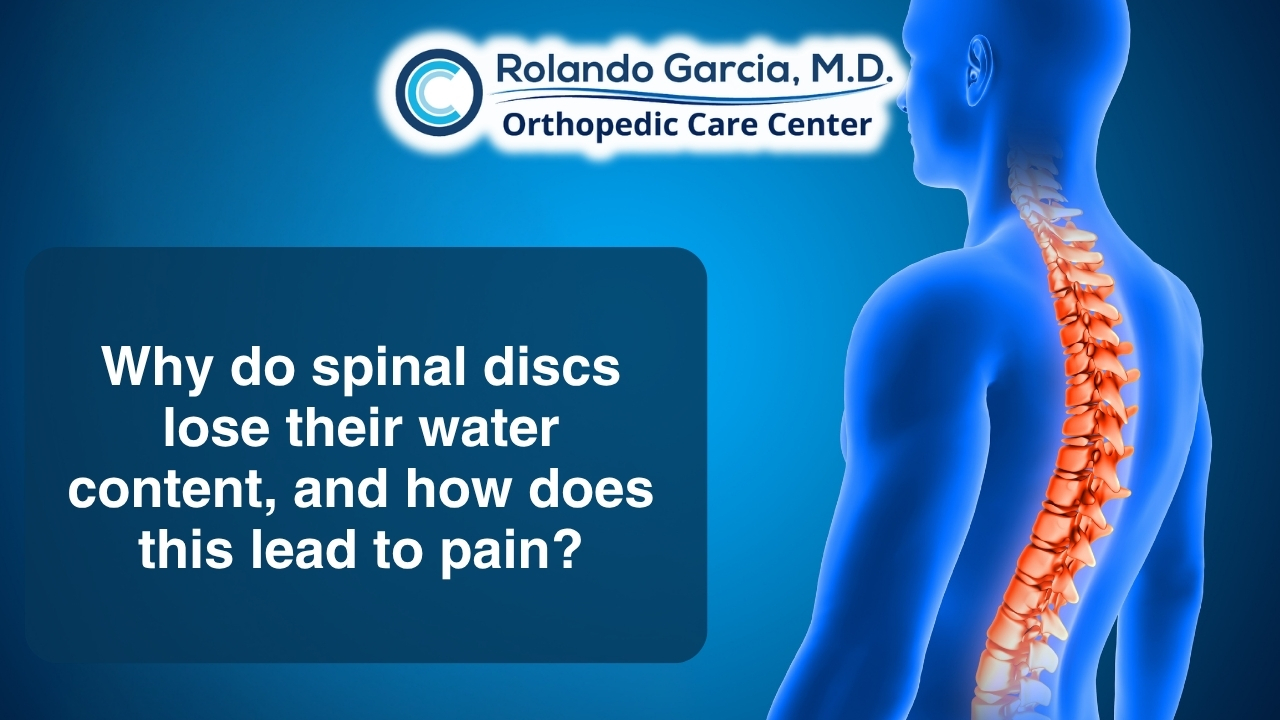 In a healthy spine, intervertebral discs contain a high water content that allows them to act as flexible shock absorbers between the bones. As part of the natural aging process, these discs gradually dehydrate, become thinner, and lose their ability...
What happens if conservative treatments fail to relieve the severe symptoms of a herniated disc?
 If conservative treatments like medications and physical therapy fail to provide relief after a few months, or if you develop progressive muscle weakness and loss of bowel or bladder control, surgical intervention becomes necessary. The most common procedure is a...
What specific physical movements should I avoid if I have a newly diagnosed herniated disc?
 If you have an active herniated disc, it is crucial to avoid movements that increase pressure on the front of the spinal column, as this can push more disc material out of the weakened outer layer. Bending forward at the...
Why does a herniated disc cause a loss of reflexes and changes in temperature sensitivity?
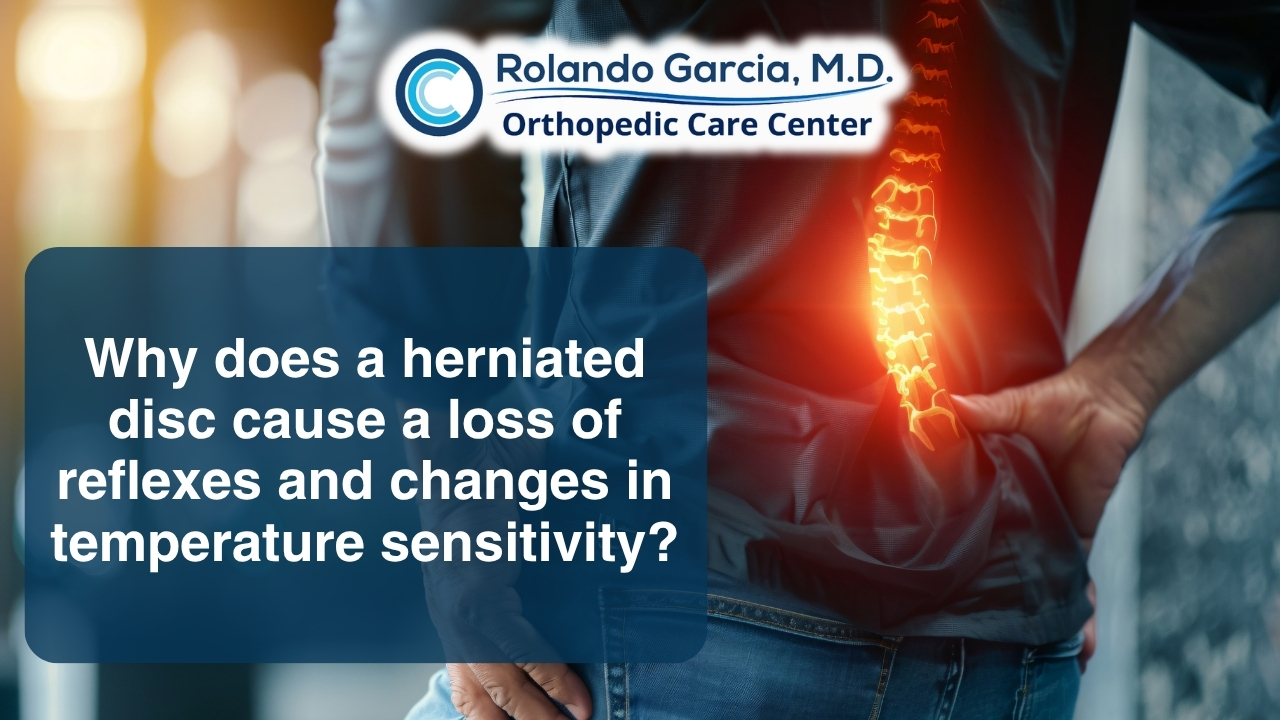 When the soft inner core of a spinal disc protrudes and presses against a spinal nerve root, it disrupts the normal transmission of electrical signals between the brain and the rest of the body. Because these spinal nerves contain both...
How do the symptoms of a cervical herniated disc differ from a lumbar one?
 The symptoms depend entirely on the specific location of the spinal nerve being compressed. A herniated disc in the cervical spine (neck) typically causes localized neck pain that radiates into the shoulders, arms, and hands. This is often accompanied by...
Can a herniated disc heal on its own without requiring medical procedures?
 Yes, many herniated discs can heal on their own through a natural physiological process called resorption. Over several weeks or months, the body’s immune system recognizes the protruding disc material as a foreign substance, gradually breaking it down and absorbing...



